

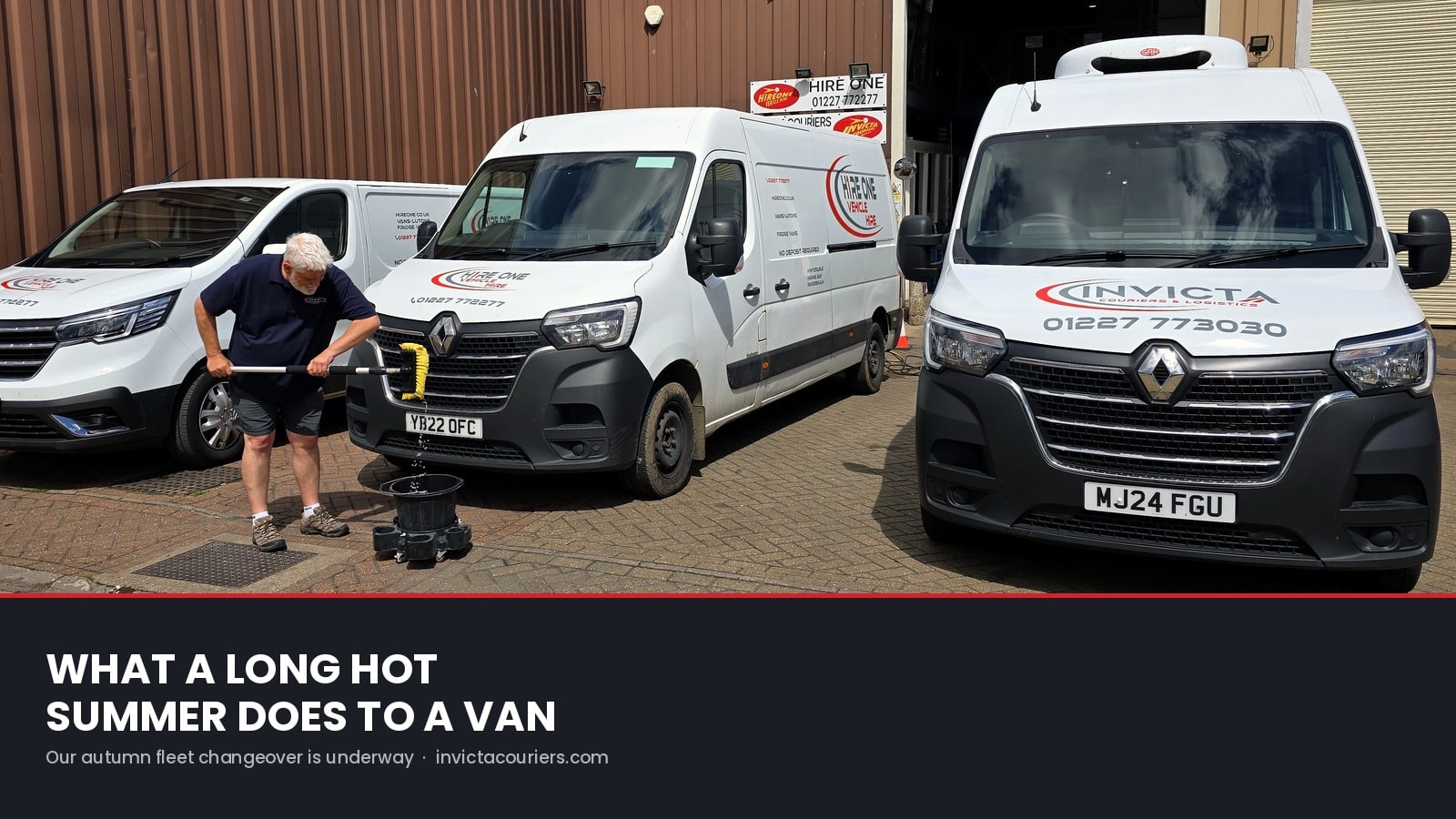
What a Long Hot Summer Does to a Van
The weather has finally turned, and for most people the summer is simply over. For a courier fleet it is not that simple. A long, hot summer leaves its mark on a vehicle, and the damage tends to reveal itself in the first cold, wet weeks of autumn.
Heat is hard on batteries. Sustained high temperatures accelerate internal wear, but a weakened battery will usually keep starting a warm engine without complaint. The first cold morning is when it fails, and it fails in a customer’s yard with a load already on board.
Heat is hard on rubber, too. Wiper blades bake and harden through the summer, then get their first real test in an October downpour. Tyre pressures fall as the temperature drops, so a pressure that was correct in July is low by now. On our refrigerated vehicles, the door seals matter more than anything. Those seals hold the cold in, and UV and heat are exactly what degrades them.
So our autumn changeover is a proper piece of work, not a quick glance around the vehicle. Batteries are load tested rather than eyeballed. Tyres are checked for tread, pressure and any heat-related cracking in the sidewalls. Lights are inspected across the whole fleet, because we are about to use them for most of the working day. Wipers are replaced as a matter of course. Fridge units, which have just come off their hardest three months of the year, are checked and recalibrated, and every door seal is inspected.
This is where our FORS Silver accreditation earns its keep. FORS requires documented maintenance, planned inspection schedules and evidence that the work is actually done, not just intended. It means a seasonal changeover like this is a defined process with a record behind it, rather than something we get to when the workshop is quiet.
The drivers matter just as much as the vehicles. Autumn changes the job. Low sun at commuter hours is blinding, particularly through a windscreen that has a summer’s worth of dust and dead flies on it. Wet leaves reduce grip. The first heavy rain after a dry spell lifts months of oil and rubber off the road surface and makes it genuinely slippery. Our drivers cover a mix of long motorway runs and dense London work, and each of those presents a different version of the problem.
We monitor driving behaviour through our tracking system all year round, and autumn is when we pay closest attention to it. Harsh braking and late braking are the things to watch as conditions worsen, and the data lets us have a specific conversation with a driver rather than a general one.
None of this is glamorous. It is the reason your consignment arrives on time in November, and it is the difference between a fleet that is maintained and a fleet that is repaired.
If you have something that needs moving, tell us what and where — our transport team will come back to you with a price.